Turn more leads into conversations.

Call, text, and follow up from one shared workspace. Give your team the context to keep conversations moving—and your developers the API to build Leadping into your business.

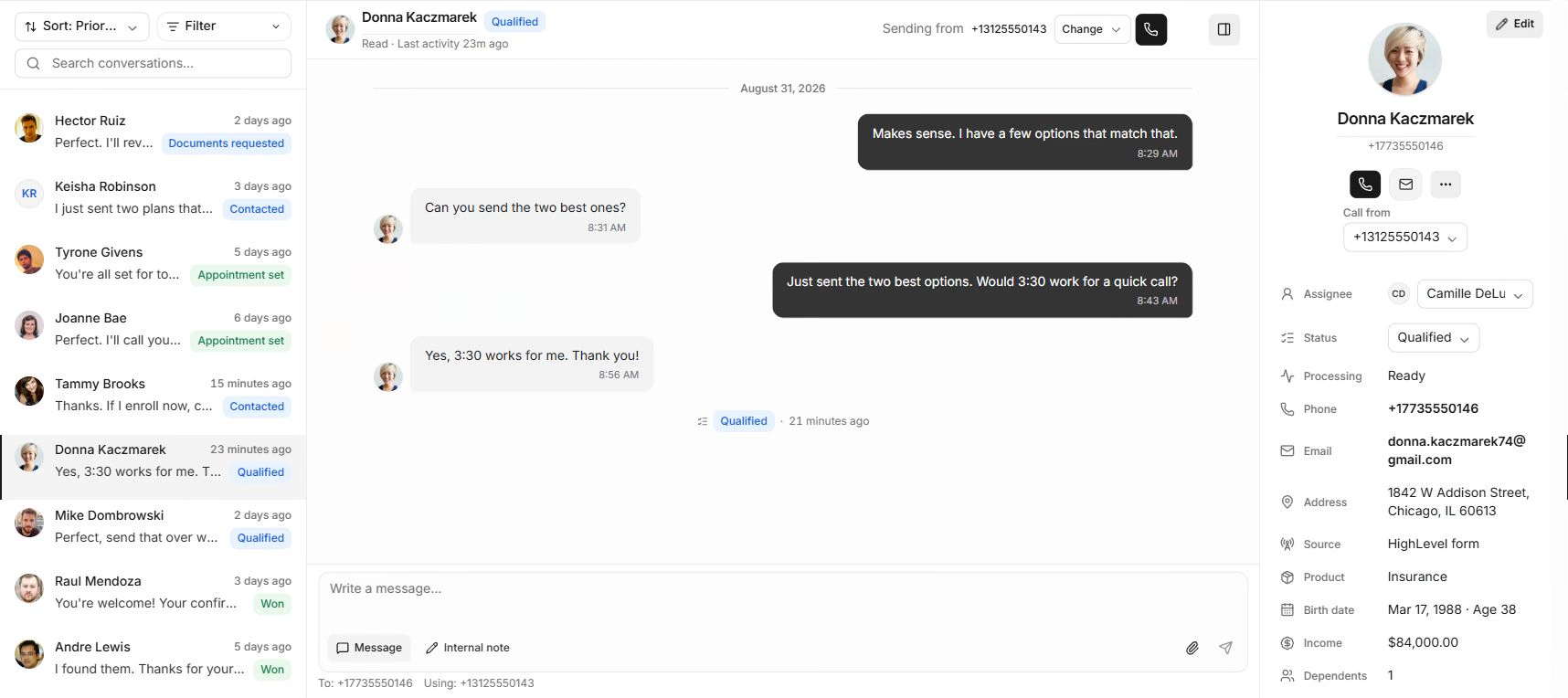
Leadping shared inbox showing a prioritized conversation queue, a live text exchange, the selected sender, owner, status, source, and lead details

Work every lead from first text to follow-up.

Your leads arrive from different sources. Your team works them in one place—with two-way texting, calling, ownership, and an activity history that shows what actually happened.

Put new replies in front of your team.

Use the shared inbox to find conversations that need a reply, see the assigned owner, and respond with the lead's previous messages in view. Interested leads don't have to compete with scheduled outreach for attention.

Text and call the same lead.

Read the conversation before a call and follow up by text afterward. Calls, messages, notes, and outcomes remain attached to the lead, so you can continue the conversation across channels.

Give each lead a clear owner.

Assign leads to teammates, add internal notes, and update their status. When someone else takes over, they can see the source, contact history, and next step without piecing together another person's inbox.

Know whether your message got through.

Inspect queued, accepted, delivered, and failed message events. See the sending number and provider result alongside the conversation, so a failed text doesn't look like a lead ignoring you.

Keep a recognizable sending number.

Leadping keeps the conversation tied to its assigned number and preserves sender continuity when that number remains eligible. The next message belongs to the thread the lead already knows.

Keep follow-up tied to its source.

Retain the lead source and campaign context with communication activity. Review where a lead came from, what was sent, and the outcome before deciding what should happen next.

Connect your existing lead stack.

Capture leads from your CRM, forms, scheduling, and consent tools. Route updates and next steps without rebuilding the systems your team already uses.

Salesforce
HubSpot
HighLevel
Pipedrive
Zoho CRM
Calendly
Cal.com
Typeform
Zapier
Make
monday.com
ActiveProspect
Google Ads
Meta
Slack
Microsoft Teams

Build follow-up that takes the right path.

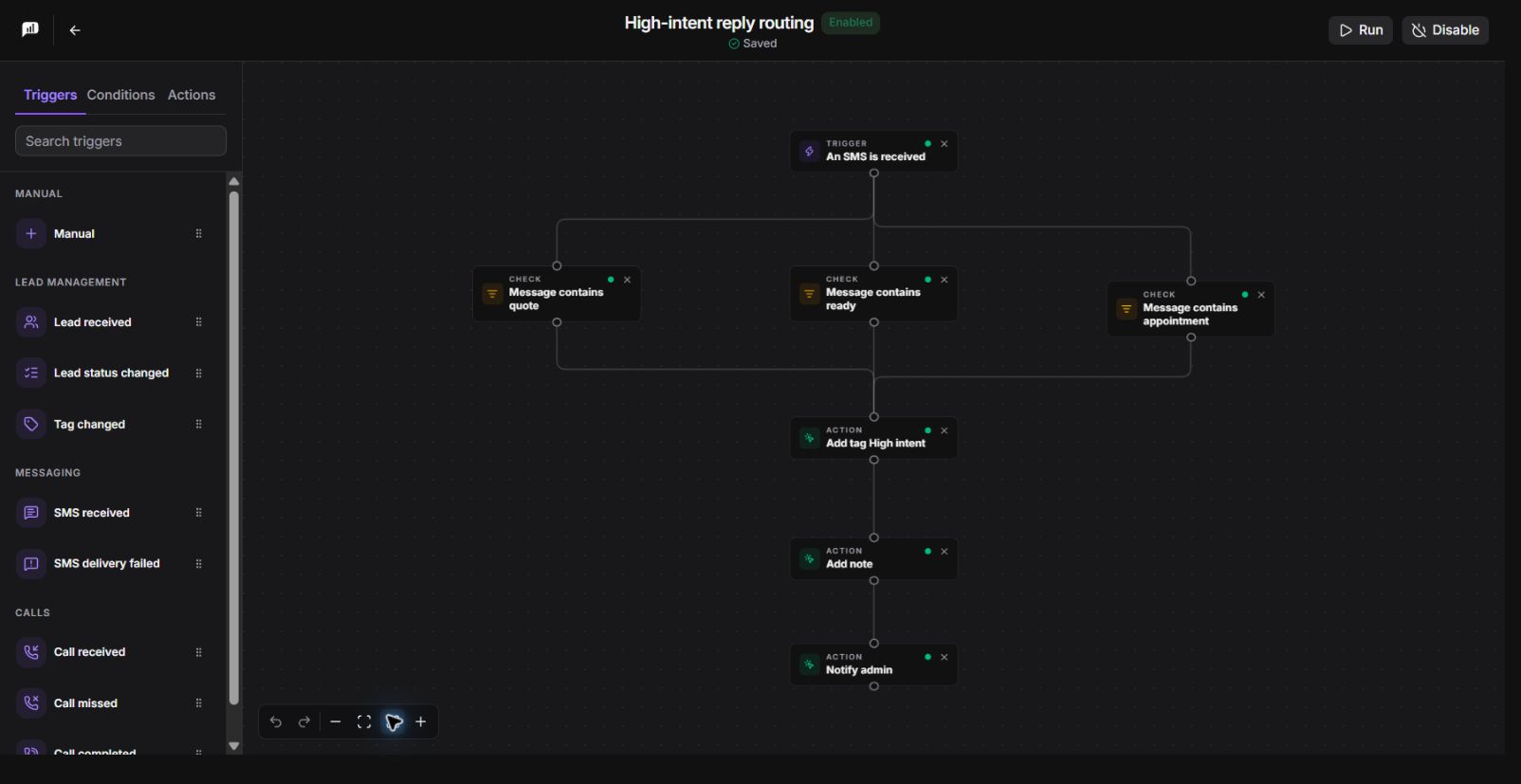
Start from a new lead, an incoming reply, a missed call, or a status change. Connect conditions and actions in the visual editor to personalize outreach, split workflows into branches, and bring in your team when it is time to act.

Leadping visual automation editor branching on quote, ready, and appointment replies before tagging high-intent leads and notifying the team

React to what the lead does.

Trigger a workflow when a lead arrives, replies by SMS, changes status or tags, misses a call, or has a text fail. Different events can start different follow-up.

Branch instead of treating every lead alike.

Check lead fields, source, location, tags, or message content. Use weighted random splits to send leads down different paths, with the percentage for each path visible on the canvas.

Personalize more than the first name.

Use lead and organization variables in messages. Add randomized text variants to vary greetings and phrasing without maintaining a separate workflow for every version.

Control the pace of follow-up.

Add a fixed wait or choose a randomized delay within a range. Keep one workflow's timing from holding up other automations.

Put the next action in the right hands.

Assign a lead, add tags and notes, and notify an admin. Send an internal notification, email, or text to an organization teammate when a lead needs attention.

Make your other tools part of the workflow.

Push leads into connected CRMs, send Slack or Teams messages, or call an HTTPS endpoint with a custom payload. Keep downstream work moving without another manual copy and paste.

API & SDKs

Your product.
Powered by Leadping.

Add calls, texts, and lead workflows to the software you already use. Connect your own lead sources, build custom experiences, and keep activity connected to the same workspace your team uses.

Use the REST API directly or start with an SDK for TypeScript, Python, .NET, Go, PHP, or Java.

outreach.ts Leadping SDK

Keep your numbers ready for the next opportunity.

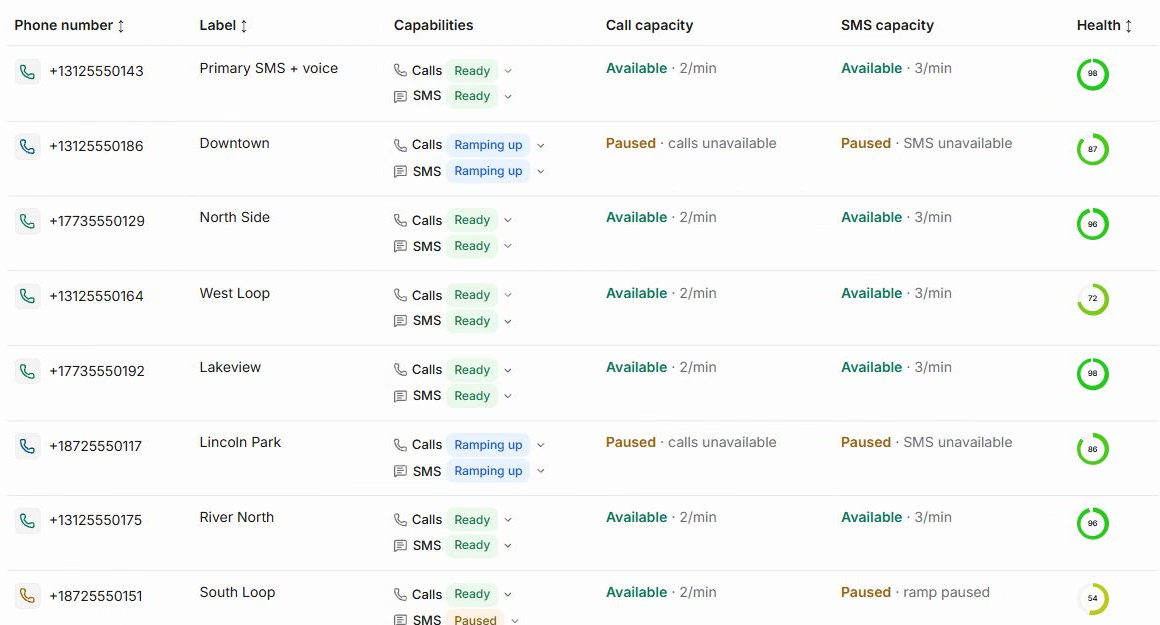
Growing outreach takes more than buying another number. Leadping tracks readiness, ramp progress, health, and call and SMS capacity across your number pool—then checks eligibility before releasing activity.

Leadping phone-number list with call and SMS readiness and individual health scores

See readiness at a glance.

See which numbers are ready, ramping up, paused, or restricted. Keep new numbers on a controlled ramp and spot senders that need attention before adding more volume.

Explore number health

Manage messaging registration.

Prepare your brand and campaign registration, track approval, and manage the associated sending numbers alongside your messaging workflows.

Explore 10DLC

Use the capacity across your number pool.

Evaluate eligible numbers for the requested activity instead of concentrating outreach on one default caller ID. Reserve capacity before release so simultaneous requests cannot spend the same availability twice.

Contact safeguards, handled for you.

Leadping automatically checks opt-outs, local contact windows, contact frequency, and number capacity before calls and texts reach the provider. We handle the checks and enforce the limits so your team can focus on the conversation.

Opt-outs are honored across your team.

Leadping checks recorded opt-outs, Do Not Call requests, wrong-number reports, and organization suppressions before another attempt. Those restrictions apply across teammates and workflows automatically.

Local contact windows are checked automatically.

Leadping checks the lead’s local time before releasing outreach. When the contact window is closed, eligible activity can be held for the next allowed time without your team watching the clock.

Contact limits span your workflows.

Leadping counts manual and automated attempts together and enforces contact-frequency limits across them. Your team does not have to reconcile separate workflows to track how often a lead has been contacted.

Number capacity is managed automatically.

Leadping checks minute, hour, and day capacity for calls and texts, then delays or stops work when capacity is unavailable. Bursts of new leads stay within the available sending capacity.

Consent evidence stays with the lead.

Leadping retains the source and supplied consent evidence behind each inquiry, including its TrustedForm certificate. Your team can trace the inquiry back to its consent context without assembling a separate record.

Delays and failures come with context.

Leadping records the contact checks, selected sender, scheduled time, and provider result with the activity. When something waits or fails, your team can see what happened and distinguish a blocked attempt from a delivery failure.

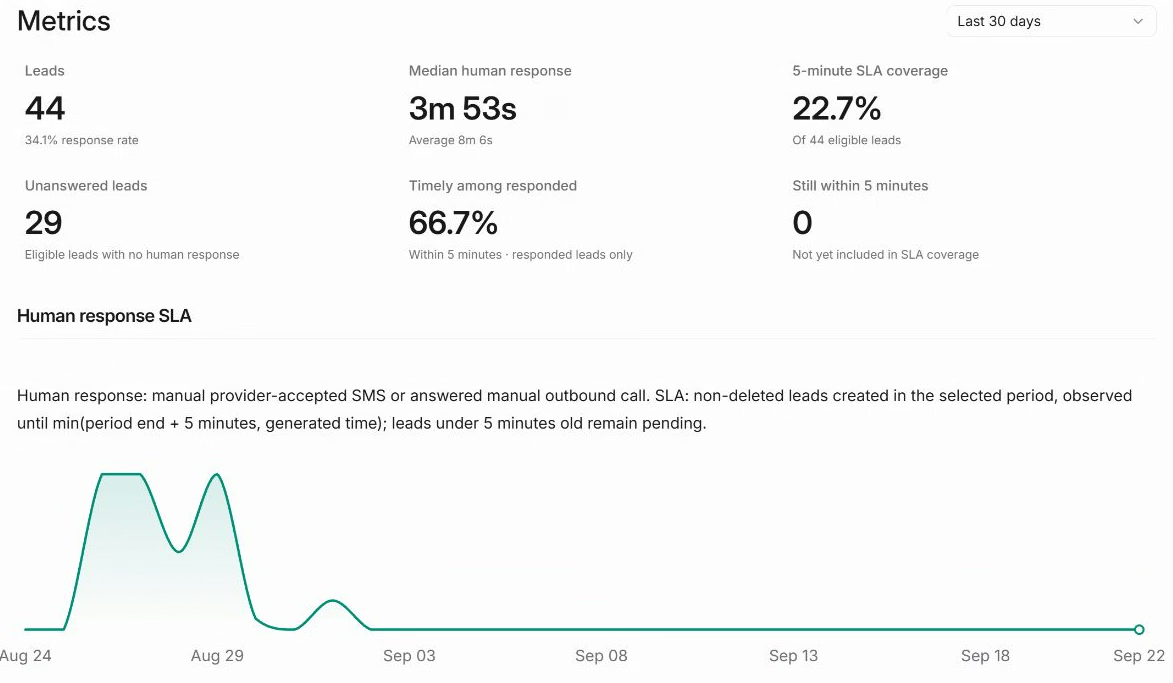
Find the gaps in your follow-up.

See how quickly your team responds, which leads remain unanswered, and how calls, texts, and automations perform. Use the results to decide where your team should focus next.

Leadping metrics dashboard with lead response rate, median human response time, five-minute SLA coverage, and response history
Get started with Leadping this afternoon.

Bring your leads, your team, and your tools together. Start the next conversation with Leadping.

© 2025–2026 Leadping LLC. All rights reserved.